
If your child plays sports, you know that snacks can become a surprisingly big part of your weekly routine.
There are the snacks you pack for soccer practice, the granola bar you throw in your bag before hockey, the banana eaten in the car on the way to dance, and of course, the cookies or cupcakes that sometimes appear after a game.
And while there is absolutely room for fun foods, I don’t think every practice or game needs to revolve around a sugary treat.
Regular sports snacks are an opportunity to give kids something their bodies can actually use: fuel for activity and nutrients to support recovery.
That doesn’t mean you need special sports products or complicated recipes. In fact, some of the best options are foods you probably already have at home.
So let’s talk about what kids actually need before and after sports and how to make snacks work for your family.
What Should My Child Eat Before a Game or Practice?
A child heading to a 45-minute soccer practice an hour after dinner may not need one at all. But a child who ate lunch at noon and has a 6 p.m. hockey practice will probably benefit from something to eat beforehand.
It really comes down to when they last ate, how much they ate and how long or intensely they’ll be active.
Active children need enough food throughout the day to support both growth and physical activity. For some children, that means snacks are an important part of meeting their overall energy needs.
What makes a good snack before activity?
Before activity, carbohydrates are especially important because they provide readily available energy for working muscles.
That means foods like fruit, bread, cereal, rice, crackers and other grain foods can all have a place in a pre-sports snack.
You can pair a carbohydrate with some protein or fat when there is more time before activity:
- banana + yogurt
- apple + cheese
- crackers + cheese
- toast + nut or seed butter
- cereal + milk
But you don’t always need a combination.
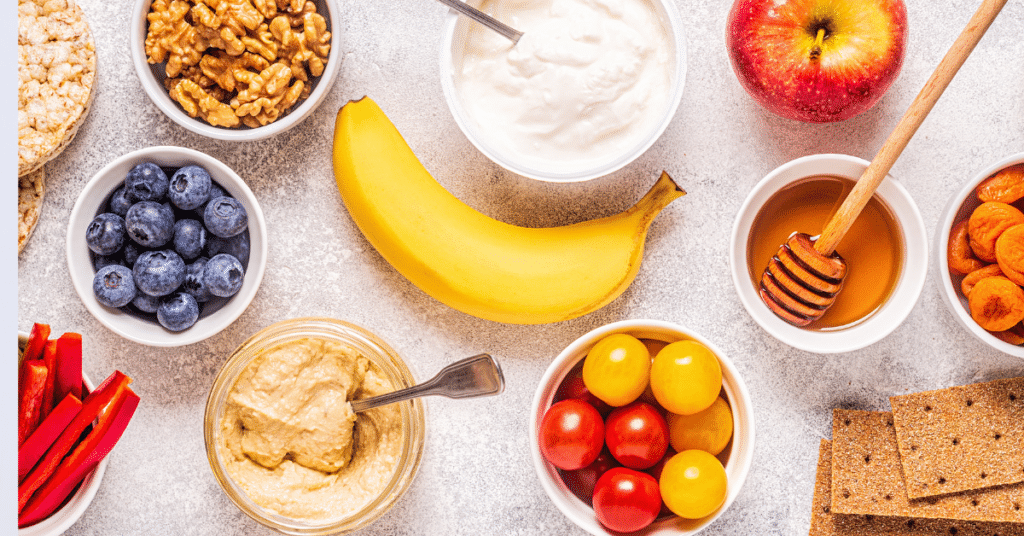
If your child is eating 30–60 minutes before practice, something simple like a banana, applesauce, crackers or a rice cake may be more comfortable than a larger snack. Need snack ideas? Check out my list of balanced snacks below:
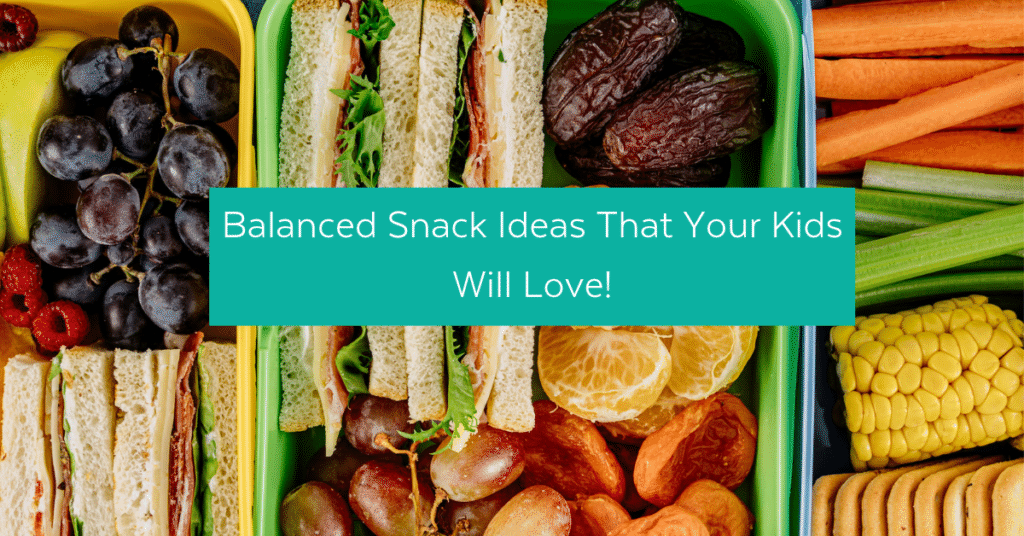
The closer you get to activity, the more important it is to choose something your child knows they tolerate well. A tournament or big game is not the time to experiment with a brand-new food.
How long before sports should they eat?
There’s no single timing rule that works for every child, but generally:
- 2–3 hours before: A regular meal or more substantial snack.
- 1–2 hours before: A smaller snack containing carbohydrates and some protein or fat.
- 30–60 minutes before: A lighter, primarily carbohydrate-based snack may work best.
Your child’s appetite and experience matter here, too. Some children can eat fairly close to activity without a problem, while others need more time to digest.
The goal isn’t to follow a perfect schedule. It’s to help your child arrive at practice or a game feeling comfortably fueled rather than overly hungry or overly full.
Reference: Sports Nutrition for Busy Families and Busy Lifestyles
What Should My Child Eat After Sports?
Once the game or practice is over, the focus shifts from fueling activity to replenishing energy and supporting recovery.
This is where a combination of carbohydrates and protein can be helpful.
Carbohydrates help replenish energy stores used during activity, while protein provides amino acids needed for muscle repair and growth. But that doesn’t mean your child needs a protein shake immediately after practice. For most kids, regular foods are more than capable of doing the job.
A yogurt with fruit, cheese and crackers, a turkey sandwich, a smoothie made with milk or yogurt and fruit, or simply their next regular meal can all provide the nutrients they need.
In fact, if dinner is happening soon after practice, dinner may be the recovery meal. You don’t necessarily need to add another snack just because your child played a sport. The exception may be a child who has another practice or game coming up soon, or a child who won’t be eating a meal for several hours. In those situations, a snack can help bridge the gap. Running out of ideas for what to make for dinner? Check out my previous blog post for some picky-eater friendly inspiration!
What about sugary treats?
This is where I think a little perspective goes a long way.
Cookies, cupcakes and other treats can absolutely be part of a child’s diet. There’s no need to make them forbidden or turn them into something children should feel guilty about eating.
But if every practice ends with a cookie and every tournament comes with candy and juice, those foods can start to become the default rather than an occasional part of the experience. For regular practices and games, try making nutritious foods the more common option and save treats for the occasions when they feel special.
Maybe that’s fruit and cheese after Saturday’s game, followed by ice cream with the team afterward.
Or it’s a homemade muffin and yogurt after practice.
Sometimes it’s the cupcake at the end-of-season party.
There is room for all of it. The goal is simply to make sure children have regular opportunities to experience food as fuel, nourishment and enjoyment and not just as a reward for being active.
What if my child is a picky eater?
Start with what they will eat. If your child only wants crackers before soccer, I wouldn’t turn game day into a battle over eating fruit and yogurt. Instead, think about what you can add when they’re ready.
- Crackers might become crackers and cheese.
- A granola bar might be paired with yogurt.
- A muffin might be served with fruit.
Small additions can make a familiar snack more filling without requiring your child to suddenly eat an entirely different meal. And if a particular food works for your child, there’s no need to replace it simply because another option looks more “healthy” on paper.
Don’t Forget About Hydration
When it comes to keeping kids hydrated during sports, my recommendation is simple: start with water.
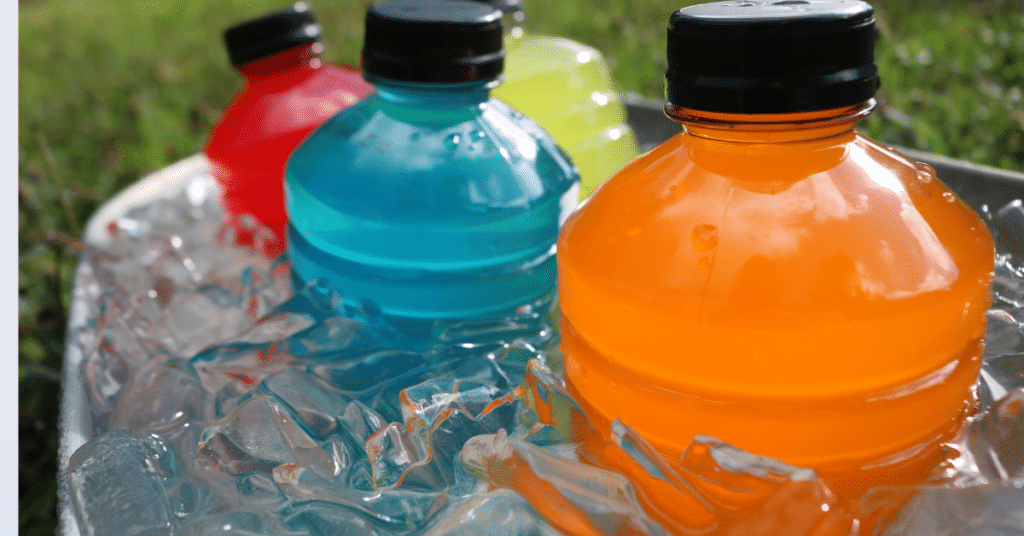
Traditional sports drinks like Gatorade and Powerade have become a staple on the sidelines, but I don’t routinely recommend them for children. Despite the marketing, most kids simply don’t need a brightly coloured, sugar-sweetened drink to get through soccer practice or a weekend game.
And the amount of added sugar in these drinks might surprise you.
For example, a 710 mL bottle of regular Powerade Mixed Berry contains 41 grams of sugar — that’s just over 10 teaspoons! That’s a significant amount of added sugar for a drink that’s often marketed as a healthy way to hydrate.
And it’s not just about the sugar in one bottle. Sweetened beverages can contribute significantly to children’s overall sugar intake. In fact, a 2023 Canadian study found that beverages accounted for approximately 19% of free sugar intake among children aged 1.5–5 years. While this study focused on younger children and included beverages beyond sports drinks, it highlights why we should be mindful of how frequently sugary drinks are offered.
It’s also worth considering that many conventional sports drinks contain added colours and flavours that aren’t necessary for hydration.
The American Academy of Pediatrics recommends water as the primary source of hydration for children and advises against routinely consuming sugary sports drinks during ordinary physical activity.
So when might your child actually need electrolytes?
If your child is participating in prolonged, strenuous activity, especially in hot weather or during tournaments with multiple games, replacing lost electrolytes and carbohydrates may be helpful.
In those situations, I prefer looking at alternatives to traditional sports drinks. This might mean water alongside a carbohydrate-rich snack, or an appropriately formulated electrolyte drink without unnecessary colours and additives. For longer, more demanding activity, a drink that combines electrolytes with carbohydrates may be useful.
Remember, carbohydrates are an important source of energy during prolonged activity, but they don’t necessarily need to come from a conventional sugary sports drink. Familiar foods like fruit, crackers or other carbohydrate-rich snacks can also help provide fuel, alongside appropriate hydration.
The important thing is to choose something that actually meets your child’s needs, rather than assuming every sports practice calls for a bottle of Gatorade.
For most kids, most of the time, water and nutritious snacks are more than enough.
The Bottom Line
Sports nutrition for kids doesn’t need to be complicated. Your child doesn’t need a special protein bar, supplement or perfectly timed snack every time they put on a jersey. They need enough food throughout the day to support growth, activity and recovery.
Before sports, think fuel (especially carbohydrates and foods that feel comfortable to digest).
After sports, think recovery (carbohydrates plus protein when a snack or meal is needed).
And overall, focus on creating a pattern where nutritious foods are the everyday foundation, while treats can still have a comfortable place.
The best sports snack is often the one your child will actually eat. Keep it simple, keep it familiar, and remember that you don’t have to get it perfect.
Looking for More Easy Snack Ideas?
Between school, sports, activities and busy weeknights, feeding active kids can feel like a full-time job.
If you’re looking for more simple, nutritious snack ideas that your kids will actually enjoy, check out my collection of healthy snack ideas for kids.
You’ll find easy options you can prep ahead, pack on the go, and keep on hand for those busy afternoons between school and the next activity.