
We’ve all heard that breakfast is the most important meal of the day.
I don’t necessarily agree.
I think what matters more is the first meal of the day, whenever your child is ready to eat it.
Some kids wake up starving. Others don’t want anything to do with food at 7 a.m. My eldest daughter is one of those kids. Eating too soon after waking can make her feel nauseous. I’m similar and usually don’t feel hungry within my first hour of being awake.
Kids have individual appetites too.
So if your child isn’t hungry first thing in the morning, I don’t recommend starting the day with pressure to finish a full breakfast.
I would look at two things instead:
- When are they ready to eat?
- How can we make whatever they do eat work a little harder for them?
For most families, that means looking for opportunities to add protein, fat and fibre to the first food of the day.
Does My Child Need to Eat Breakfast as Soon as They Wake Up?
No.
Hunger can look different from child to child, and even from one morning to another. Health Canada also encourages parents to allow children to decide how much they want to eat and to pay attention to hunger and fullness cues.
If your child consistently isn’t hungry when they first wake up, you can experiment with timing rather than turning breakfast into a battle.
Maybe breakfast happens:
- 30 or 45 minutes after waking
- on the drive to school
- during the walk to school
- shortly before leaving the house
- as a small first breakfast followed by another opportunity to eat later
The goal is not to force food into a child who doesn’t feel ready to eat.
The goal is to find the window when eating feels easier.
If your child regularly feels nauseous, has significant appetite changes, isn’t growing as expected, or there are other medical concerns affecting eating, talk with their doctor or appropriate healthcare provider.
Why Does the First Meal of the Day Matter?
Your child has gone many hours without eating overnight. Their first food provides the body and brain with a new source of energy.
This is where what’s in the breakfast can make a difference.
A lot of common children’s breakfasts can be heavy in refined carbohydrates and added sugars while being relatively low in fibre, protein or fat.
Think about:
- plain frozen waffles or pancakes
- sugary cereals
- white toast
- croissants
- plain bagels
- some sweetened breakfast bars
Carbohydrates are broken down into glucose, which enters the bloodstream and causes blood glucose to rise. Foods that are more rapidly digested can create a faster rise in blood glucose than meals with a lower glycemic load.
Research in children confirms that breakfasts with different glycemic loads can create different blood glucose responses. What we cannot say is that every child who eats a waffle will automatically have a dramatic crash, lose focus or crave sugar all afternoon. Children respond differently, and the research on breakfast composition and cognition is mixed. citeturn956779search5turn956779search2
That’s why I focus less on trying to create a “perfect” breakfast and more on balancing what the child already eats.
Protein, fat and fibre also make a meal more complex to digest and can help make breakfast more sustaining.
And when a child is extremely hungry an hour or two later, quick-energy foods can become much more appealing.
Think about going grocery shopping when you’re starving. Suddenly the chips, cookies and ice cream look a lot more interesting than they did when you walked into the store after eating lunch.
Kids aren’t immune to that feeling.
This is one reason I want the first meal of the day to give them more than just a quick source of carbohydrate when we can.
Instead of Replacing Breakfast, Upgrade It
This is especially important with picky eaters.
If your child reliably eats an Eggo waffle every morning, I am not suggesting you remove the waffle and replace it with scrambled eggs, avocado and whole-grain toast tomorrow.
You’ll probably end up with a hungry child and an untouched breakfast.
Start with the food they trust.
Then ask:
What could I add?
For example:
- Waffle: add peanut or seed butter and some berries or banana
- Toast: add butter, nut or seed butter, cheese or an egg
- Bagel: add cream cheese, egg, cheese or nut/seed butter
- Cereal: serve it with milk and add fruit or seeds if your child accepts them
- Croissant: add cheese or egg and fruit on the side
- Yogurt: add berries, higher-fibre cereal, granola, chia or another accepted food alongside it
- Pancakes: add nut/seed butter or serve with yogurt, fruit or egg
You don’t need to hit every nutrition target at every breakfast.
Look for the next easiest addition.
What If My Child Barely Eats Anything Before School?
Then I would start smaller.
For a child who isn’t hungry in the morning, a full plate can actually make eating feel harder.
Try:
- half a piece of toast with peanut or seed butter
- a few spoonfuls of yogurt
- half a banana
- a homemade energy ball
- a small smoothie
- a hard-boiled egg
- cheese and crackers
- half a homemade muffin
- whatever familiar food your child is currently comfortable eating
If breakfast is a struggle, I would rather see a child comfortably eat a small amount than have a parent spend 20 minutes negotiating three more bites.
Start with eating. Then improve the quality from there.
Give Kids Some Choice at Breakfast
Choice can be really useful with picky eaters, but there is a big difference between offering some autonomy and becoming a short-order cook at 7:15 in the morning.
Instead of:
“What do you want for breakfast?”
Try:
“Would toast or yogurt feel better this morning?”
Or:
“Do you want peanut butter or cream cheese on your toast?”
Or simply:
“What feels good for your tummy this morning?”
You still provide the structure while your child gets some say in what goes into their body.
That can be particularly helpful for kids who wake up without much appetite.
Can My Child Eat Breakfast on the Way to School?
Absolutely, if that works safely for your family.
Sometimes the problem isn’t actually breakfast.
It’s the timing and environment around breakfast.
Mornings can be chaotic. Kids are getting dressed, looking for homework, packing bags and being reminded for the fifth time to put their shoes on.
Some children simply aren’t ready to sit down and eat during all of that.
A portable breakfast may work better.
Depending on what your child eats, that might be:
- an energy ball
- a banana with nut or seed butter
- a small sandwich
- a smoothie
- a homemade muffin
- yogurt
- cheese and crackers
- another familiar food that’s easy to bring along
Breakfast also doesn’t have to look like breakfast food.
If your child wants leftover chicken, a quesadilla or half a sandwich at 8 a.m., that’s still food.
Breakfast Is Also an Overlooked Opportunity for Picky Eaters
After working with more than 1,000 families over the past decade, one pattern I see all the time is families rotating through the same one to three breakfasts every morning.
That’s understandable. Mornings are busy, and once parents find something their child will reliably eat, they don’t want to mess with it.
But breakfast can also be another opportunity to gently build food flexibility.
That does not mean taking away their safe breakfast.
Keep the familiar food and occasionally add a very small exposure alongside it.
Maybe that’s:
- one raspberry beside the usual waffle
- a tiny piece of egg next to their toast
- a different type of berry
- a small amount of a new spread beside the familiar one
- a different shape or type of bread
No pressure to eat it.
You’re simply creating another opportunity for their brain and body to become familiar with food.
Check out Danielle’s article on the five windows for offering children new foods
If mornings are already your child’s hardest eating time, this may not be the best place to work on exposure. That’s okay too. We always want to choose the eating windows where a child has the most capacity to explore.
Is Cereal Enough for Breakfast?
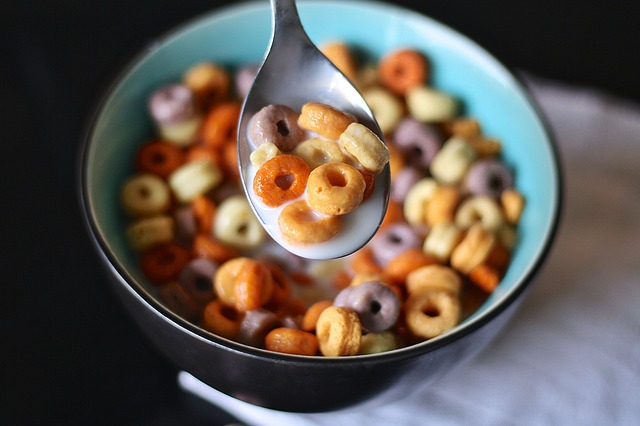
It can be a starting point.
Rather than deciding cereal is “bad,” look at the whole meal.
Could you serve it with milk?
Do you choose a cereal with more fibre?
Could fruit go beside it?
Would your child accept pumpkin seeds, chia seeds or another source of fat or protein?
Small changes count.
What If My Picky Eater Won’t Eat Protein at Breakfast?
Don’t force it.
Protein doesn’t have to mean eggs or meat.
Depending on what your child accepts, protein foods can include:
- milk
- yogurt
- cheese
- peanut or other nut butter
- seed butter
- tofu
- eggs
- beans or hummus
- leftovers from another meal
And if your child currently accepts none of those at breakfast?
Start where they are.
Keep offering opportunities without turning protein into another source of pressure.
The Key Takeaway
The first meal of the day matters, but that doesn’t mean every child needs a large, picture-perfect breakfast five minutes after waking up.
Respect your child’s appetite.
Find the time when they’re most able to eat.
Start with food they already accept.
Then ask how you can add a little more protein, fat or fibre to help make that first meal more balanced and sustaining.
A waffle with peanut butter is progress.
A few bites of yogurt count.
Breakfast eaten on the drive to school still counts.
You don’t need perfect.
You need a starting point that works for your child.
Stuck in the Same Breakfast Rut?
I’ve put together 10 picky eater-friendly breakfast ideas to give you simple options beyond the same bowl of cereal or piece of toast every morning.